

For 6 hours each day, Mohammed Ahmed Sayed Mohammed rows a boat from al-Qarsaya Island (Cairo, Egypt) across the waters of the Nile River, heading towards the riverside nightclubs of the capital. 15 years ago, he was fishing, but now he goes “hunting” for plastic bottles.
“The fish have fled due to too much plastic waste,” Sayed said. Previously, when the Nile River was clear, the 60-year-old fisherman caught 25 kg of fish each day; now he only catches about 4-5 kg. The severe decline in fish stocks has forced 180 fishermen on the island to abandon their traditional profession and switch to collecting trash.
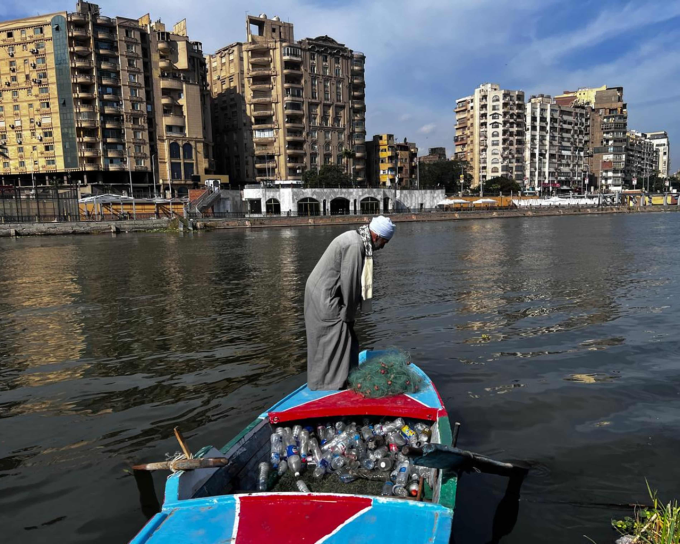
Al-Qarsaya is located in the heart of Cairo, a city of 22 million people. This island sits in the middle of the Nile River and can only be reached by ferry or fishing boat. The fishing and farming community on the island is struggling with environmental degradation due to plastic waste.
Previously, plastic waste was often collected by fishermen simultaneously with fishing activities. Many would retrieve 6-17 kg of plastic each day. Now, most fishermen work with the VeryNile program to collect plastic waste. This initiative, started by the social enterprise Bassita, aims to mobilize local fishermen to collect plastic waste from the river since 2018.
Hana Tohamy, head of cooperation and awareness-raising at VeryNile, said the real starting point of this initiative is to integrate local fishermen into the circular economy. They are an indispensable part of the Nile River ecosystem and are also the most affected by pollution.
“The equation is very simple: the more plastic waste, the less fish,” Tohamy said. The VeryNile program started with 4 fishermen and gradually expanded to about 180 people collecting plastic waste. They buy plastic waste at a higher price than the recycling market, providing fishermen with higher income than selling fish.
For example, each kg of fish sold brings Sayed 70 Egyptian pounds (equivalent to 1.3 USD). Meanwhile, plastic sold through the VeryNile program was priced at 8 pounds (0.15 USD) in 2018, gradually increasing to 33 pounds (0.63 USD). The price for collected aluminum cans is even higher, at 85 pounds (1.61 USD) per kg. Although the price is lower, the amount of plastic Sayed collects can reach up to 20 kg during the low season, giving him an income of 12.6 USD, double what he earns from selling fish.
“I have married off three children with the money earned from collecting trash,” Sayed said. He also built a café for his eldest son on the island, as he could not find a job.
Additionally, the VeryNile project has created jobs for 25 women on the island in kitchens, sorting workshops, and product design. Hoda Gamal, a woman working in the workshop, said that initially, fishermen believed that the decline in catch was a punishment from the gods. “They did not understand what environmental pollution or plastic pollution was,” she said.
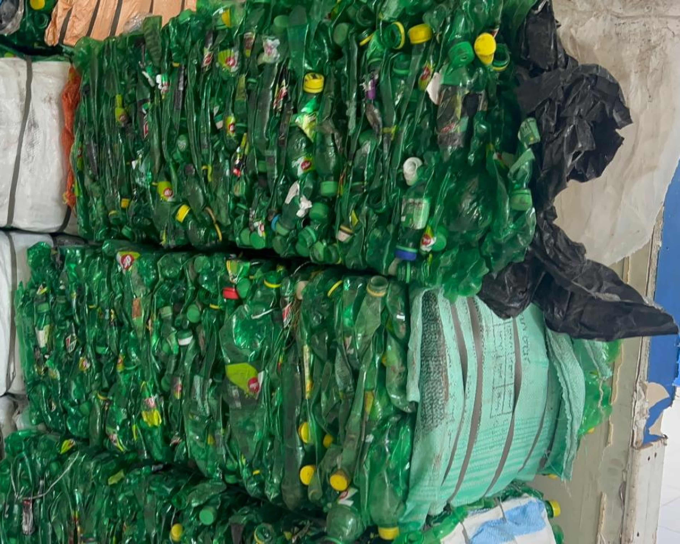
Since its inception, the VeryNile initiative has collected over 454 tons of plastic waste from the river. The collected waste will be sorted. High-value plastics, such as bottles with caps removed, are compressed into bales and transported to factories, recycled into brooms. Mixed plastic waste, including discarded flip-flops, straws, foam pieces, and fabrics, is sent to factories to be burned as alternative fuel.
Collecting plastic bottles and plastic bags is contributing to the protection of the Nile River. Fishermen who once supplied fish to Cairo are now providing raw materials for the city’s recycling economy, transforming what was once a pollutant into a resource and creating a new business model.