

On March 2, the gas giant QatarEnergy announced it would cease production of liquefied natural gas (LNG) products. Previously, on March 1, the Qatari government reported that a facility belonging to QatarEnergy was attacked by two Iranian drones. Authorities are assessing the damage.
Qatar’s LNG output accounts for 20% of global supply. The country is also the second-largest LNG exporter in the world after the U.S., playing a significant role in balancing demand in the European and Asian markets. Asian customers currently make up 82% of QatarEnergy’s total clientele.
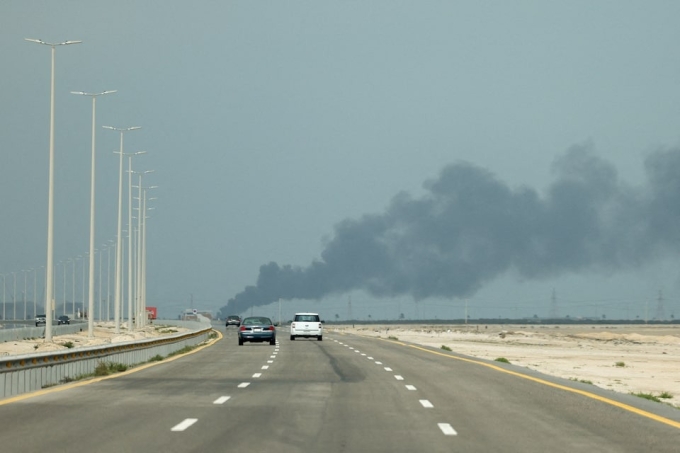
In the autonomous Kurdish region of Iraq, companies such as DNO, Gulf Keystone Petroleum, Dana Gas, and HKN Energy have temporarily halted operations at oil fields, although no damage has been reported. Last month, this region exported about 200,000 barrels of oil per day through pipelines to Turkey’s Ceyhan port.
On March 2, Brent crude oil prices surged by as much as 13% to over $82 a barrel – the highest since January 2025. The conflict has extended into its third day, causing transportation through the Strait of Hormuz to be nearly paralyzed. About 20% of global oil supply passes through this route.
In Israel, the government has requested Chevron to temporarily shut down the massive Leviathan gas field. A Chevron spokesperson stated that the company’s facilities remain safe. Energean has also halted operations of vessels servicing smaller gas fields.
In Iran, several explosions were reported on February 28 at Kharg Island – where 90% of Iran’s oil exports are processed. However, the extent of damage to the facilities there is currently unclear.
Iran is the third-largest oil producer in the Organization of the Petroleum Exporting Countries (OPEC), supplying about 4.5% of global supply. The country’s output is approximately 3.3 million barrels of crude oil per day, along with 1.3 million barrels of condensate and other liquid fuels.
On March 2, Reuters also cited sources close to the matter stating that Saudi Arabia had shut down its largest oil refinery – Ras Tanura (owned by the state oil company Saudi Aramco) after being attacked by a drone. This facility has a capacity of 550,000 barrels per day, located within Saudi Arabia’s coastal energy complex and is also an important crude oil export port for the country.
On Al Arabiya, a spokesperson for the Saudi Ministry of Defense stated that two drones were intercepted at this location. The debris caused a small fire, but there were no casualties.
However, the closure of Ras Tanura could raise concerns about supply as shipping through the Strait of Hormuz is nearly at a standstill. “The attack on the Ras Tanura facility marks a significant escalation, as Gulf energy infrastructure has now become a target for Iran,” concluded Torbjorn Soltvedt, an analyst at consulting firm Verisk Maplecroft.