

In a letter sent to customers last week, the “giant” oil company Saudi Aramco (Saudi Arabia) announced that it has not yet determined the oil export port for April. They may deliver from the Red Sea or the Gulf. “I might have to call Iran to ask when the fighting will end to get oil,” a regular customer of Aramco said after receiving the letter, as the conflict in the Middle East enters its third week.
Reuters cites experts’ opinions that Iran’s message reinforces the view that while the U.S. and Israel may declare an end to hostilities at any time, Iran is the one that decides when to end the disruption of global energy supply.
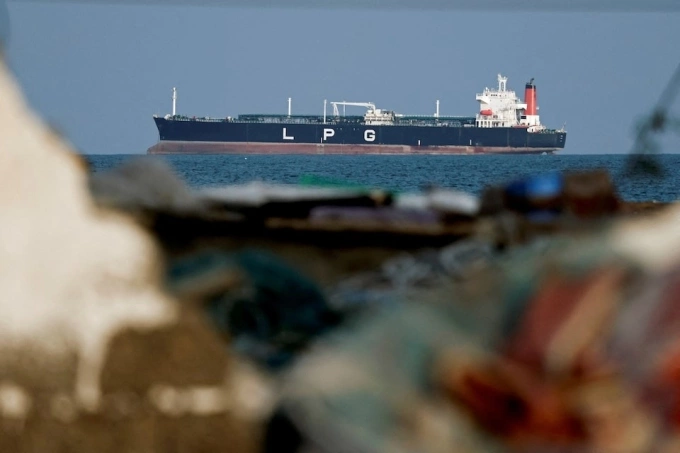
Iran is responding to U.S. and Israeli attacks by launching drones (UAVs) and missiles at vessels in the Strait of Hormuz. Before the conflict, this was the route for about 20% of the world’s oil and gas. This strait has been blocked for more than two weeks, causing the most severe supply disruption ever, according to the International Energy Agency (IEA).
U.S. President Donald Trump has repeatedly stated that the U.S. is nearing victory. However, the timeframe he provided has fluctuated from a few days to a few weeks.
Leaders of energy companies in the Middle East and the West assess that the U.S. commitment to ensuring safety is insufficient to restore production and transportation, even if fighting were to cease right now.
Trump has stated that the U.S. could deploy military vessels to escort ships to restore traffic through the Strait of Hormuz and urged allies to send warships to protect this route. However, a senior energy official in the Gulf stated that escort vessels would not be able to help operations return to normal unless the U.S. and Israel reach an agreement with Tehran, such as ceasing attacks or threats against vessels. He said that his country’s oil tankers would not leave port until Iran ensures safety.
Even if the U.S. and Israel declare an end to hostilities, Iran could still use UAVs to disrupt or paralyze transportation activities for many more months. In meetings last week at the White House, CEOs of major energy companies including ExxonMobil, Chevron, and ConocoPhillips warned that the disruption of global energy supply could worsen in the near future.
Neil Quilliam, an expert at the Chatham House research institute, stated that if the U.S. and Israel declare victory under conditions that Iran does not accept, Tehran will continue to disrupt using mines and UAVs to prove they have not been defeated.
Last weekend, a drone attacked the oil port of Fujairah in the UAE. This occurred just hours after the U.S. struck military targets on Kharg Island, where Iran’s main oil export port is located.
RBC Capital analyst Helima Croft noted that Tehran wants to send the message that there is no safe place in this conflict and Washington cannot control the escalation of the situation. She warned of the risk that Iran’s allies in Yemen, Iraq, and elsewhere will get involved. For example, the Houthi forces in Yemen could worsen the situation if they attack the Yanbu port in the Red Sea, which is currently Saudi Arabia’s only alternative oil export route.
An energy advisor to the Iraqi government stated that the crisis has shattered confidence in supply routes and exposed the region’s weaknesses in protecting its energy systems. Repairs will take months, while shipping insurance is becoming increasingly expensive and harder to obtain due to heightened risks.
Iran’s attacks have caused many refineries in Saudi Arabia, the UAE, Bahrain, and Israel to halt operations temporarily, pushing oil and gas prices up by as much as 60% in just over two weeks.