

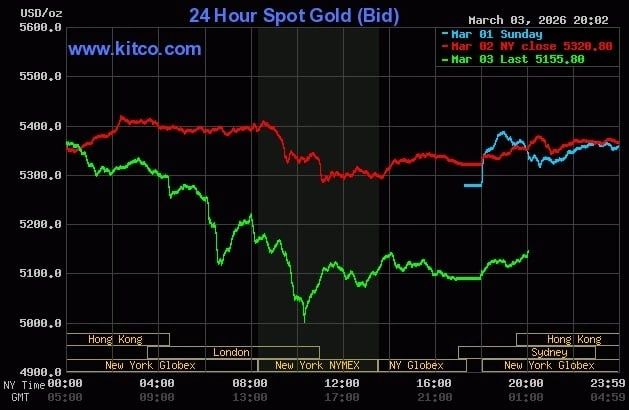
After a slight increase on the morning of March 3, the global gold price began to drop sharply in the afternoon. At one point, the price lost up to 320 USD in the evening, falling to 5,000 USD per ounce. By the end of the session, each ounce of gold had decreased by 233 USD. By the morning of March 4, the price slightly rebounded, currently trading at 5,117 USD.
The market declined as the US dollar strengthened. The Dollar Index – which measures the strength of the USD against 6 major currencies – rose by 0.9% to its highest in a month. “The strong increase in USD price and US government bond yields are significant barriers for gold and silver,” said Ross Norman, an independent analyst, to Reuters.
The spot silver price also experienced a similar trend. After dropping to 79 USD per ounce on the evening of March 3, the price narrowed its decline, closing the session at 82 USD. Currently, each ounce of silver is trading around 83 USD.
A strong USD makes gold less attractive, as the precious metal becomes expensive for buyers using other currencies. Meanwhile, rising US government bond yields make gold less appealing since it does not pay interest.
Another reason for the decline is that investors are betting that the US Federal Reserve (Fed) will maintain interest rates at the current level for a longer period to monitor inflation.
The conflict has caused energy prices to accelerate, posing a risk of igniting inflation. Since February 27, global crude oil prices have increased by nearly 15%. In just the session on March 3, Brent oil rose by 4.7% to 81 USD per barrel. This is the highest level since January 2025.